


Fort STANTON
County: Lincoln County
Year Established: 1855
Year Abandoned: As a Tuberculosis Hospital (1953/1966): The federal government closed the sanatorium in 1953 after new treatments for tuberculosis were discovered, transferring it to the state. New Mexico ran it as a hospital until 1966, when a declining patient load caused it to shut down.
As a Training School and Prison (1995/2004): It subsequently operated as a school for the mentally disabled until 1995, and later housed a low-security women's prison and rehab programs before finally closing those institutional operations and becoming a historic site.
.
Location:
About:
Remains: Fort Stanton may be one of the most intact 19th-century military forts in the country and is the best-preserved fort in New Mexico. Over 85 intact building's makes well worth the trip, but make sure to show up during regular hours and days of operation.
Thursday - Monday 10:00am to 4:00pm Closed Tuesday's and Wednesday's
Officer's Quarters

Built in 1855 as a single story, gabled roof structure of simple design and construction, this building housed officers and their families. It was here that 2nd Lieutenant John J. Pershing was quartered 1887 and where he met his wife. On August 2, 1861, the building along with the rest of Fort Stanton, was burned and heavily destroyed in advance of invading Texas Confederate forces. It was rebuilt after the Civil War and was modified several times over the years, receiving its greatest architectural features in the early 1900's.
Chapel
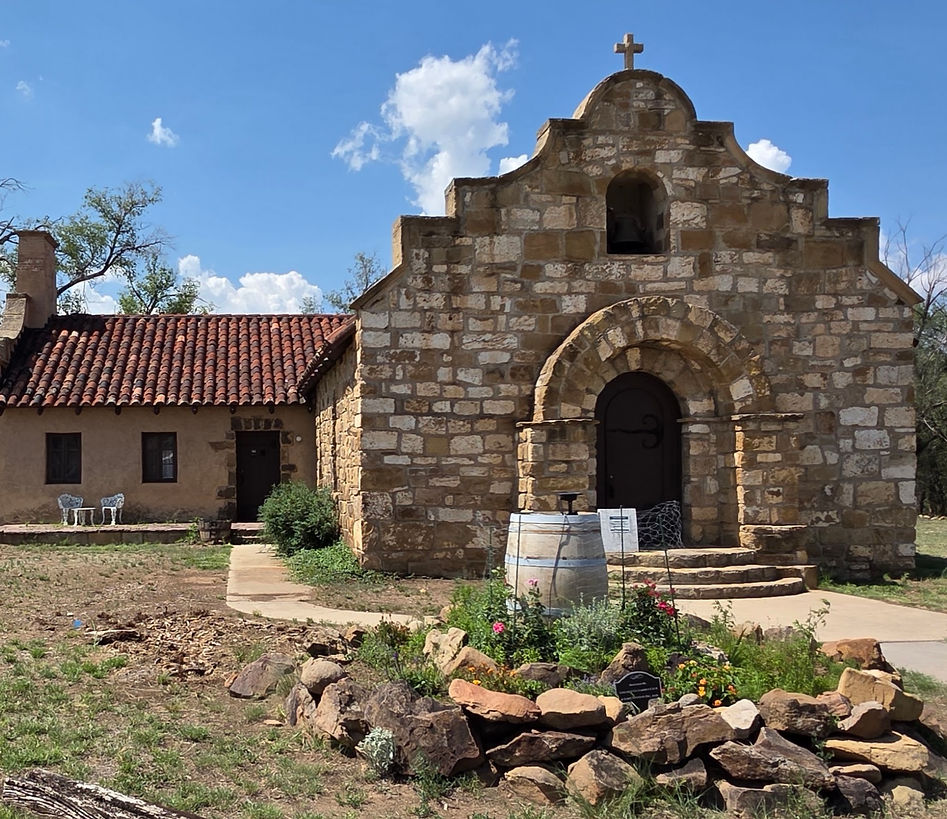
The old Catholic chapel in its original location with a new stone facade

The catholic chapel was originally built in 1913 on a wing across the parade ground. A new stone facade was added to the old chapel consisting of stones from the original barracks/hospital that was demolished. In 1940, a new chapel was built on the site and the stone facade that was installed on the old chapel was demolished, moved to this new chapel and reassembled.
New Hospital


This new hospital building replaced the old tubercular hospital in 1936. It was state of the art when constructed and boasted a bed capacity of 85 patients and the first elevator in the state of New Mexico. Doctors that were stationed at Fort Stanton were tubercular patients themselves.

